
AI Fashion Photography: How It Works and When to Use It
AI fashion photography is changing how fashion brands create campaign visuals, product images, and editorial concepts. With artificial intelligence, brands can explore new backgrounds, generate virtual models, and develop visual concepts without producing every element in a traditional photoshoot.
However, AI is not a complete replacement for professional fashion photography. The best results often come from combining AI tools with photographic expertise, creative direction, and careful quality control.
In this guide, we will explore how AI fashion photography works, its benefits and limitations, the tools and workflows available, and how fashion brands can use AI while maintaining a consistent brand identity.
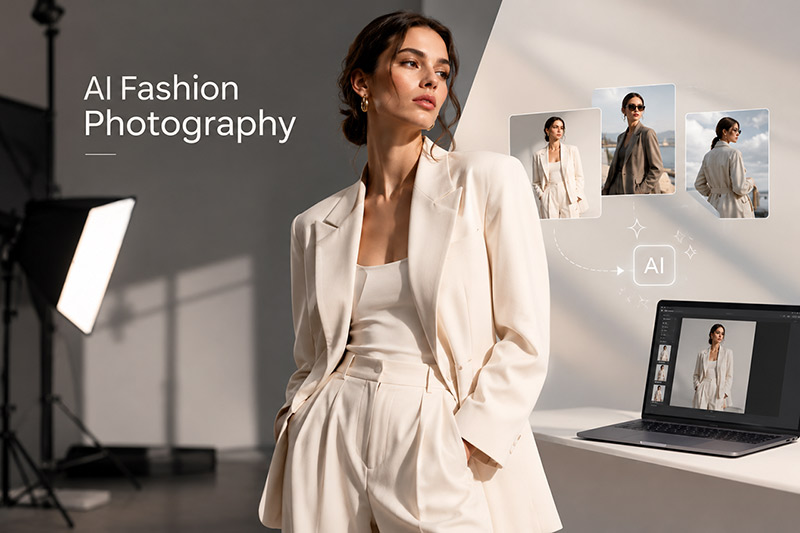
AI Fashion Photography: How It Works and When to Use It
What Is AI Fashion Photography?
AI fashion photography uses artificial intelligence to generate, transform, or enhance fashion images. Depending on the workflow, it can create entirely synthetic visuals or modify photographs captured with a real camera.
For example, a fashion brand might photograph a garment in a studio and use AI to place it in a different environment. Another brand might generate a campaign concept featuring a virtual model in a digitally created location.
AI fashion photography commonly includes:
- AI-generated fashion models: Creating synthetic people to present clothing and accessories.
- AI fashion product photography: Generating or adapting product images for online stores and advertising.
- Virtual fashion campaigns: Producing campaign concepts with AI-generated environments, models, and compositions.
- AI image editing: Modifying backgrounds, extending images, removing distractions, or adapting compositions.
- Virtual try-on: Simulating how garments may appear on a person or model.
- AI-assisted retouching: Speeding up selected editing tasks while preserving the original photograph.
These applications serve different purposes. Generating a conceptual fashion campaign is not the same as producing accurate ecommerce images, where customers need to see the actual product clearly.
How Does AI Fashion Photography Work?
AI fashion photography workflows vary depending on the tool, the source material, and the desired result. Some tools generate images from text prompts, while others use existing photographs as references.
A typical workflow involves five steps.
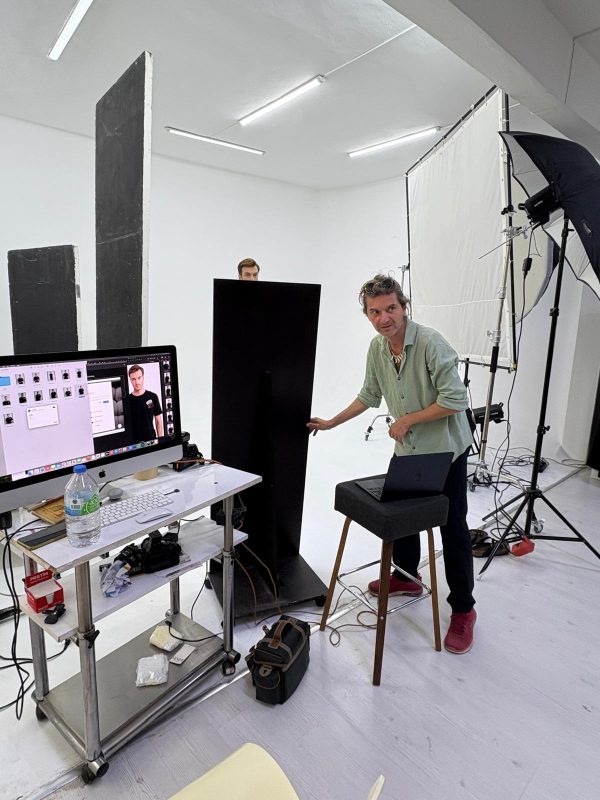
1. Define the Creative Direction
Start with the objective of the image. Is it intended for an ecommerce listing, a social media advertisement, a fashion editorial, or a seasonal campaign?
Define the target audience, visual style, lighting, colors, location, model characteristics, and aspect ratio before generating images.
A detailed creative brief helps produce consistent results and reduces unnecessary experimentation.
2. Prepare Your Source Images
Depending on the workflow, you may need a product photograph, a model image, a flat-lay photograph, a mannequin shot, or a visual reference.
For clothing, the source image should clearly show important details such as the garment’s silhouette, seams, fabric texture, color, and construction.
Clean, well-lit source photographs generally provide a stronger starting point than poorly exposed or heavily distorted images.
3. Write a Detailed AI Prompt
An AI prompt describes the image you want to create. Instead of writing only “fashion model wearing a black dress,” include relevant details about the composition and visual style.
For example:
“Create a sophisticated editorial fashion photograph featuring a model wearing a minimalist black evening dress. Use soft directional studio lighting, a neutral architectural background, natural-looking skin texture, realistic fabric folds, elegant posing, and a refined luxury campaign aesthetic. Preserve the garment’s original design and proportions.”
The result will depend on the tool, its reference-image capabilities, and how accurately it interprets your instructions. A prompt alone cannot guarantee that a product’s design will remain unchanged.
4. Generate and Refine the Image
Generate several variations, then evaluate the results against your creative brief.
Look closely at the garment’s shape, hands, face, fabric, accessories, shadows, and background. Correct obvious inconsistencies and regenerate problematic areas where the tool allows it.
For commercial work, selecting the most attractive image is only part of the process. You must also determine whether the image accurately represents the product and meets the intended usage requirements.
5. Review and Export
Before publishing, check image dimensions, sharpness, color consistency, composition, and any platform-specific requirements.
For ecommerce, compare the AI-generated result with the actual product. For a fashion campaign, review the visual consistency across the entire image series.
Finally, establish whether the image needs to be identified as AI-generated under applicable platform rules, advertising requirements, or brand policies.
Benefits of AI Fashion Photography
AI can make some parts of fashion image production faster and more flexible. Its value depends on the type of project and how much control the brand needs over the final image.
Faster Concept Development
AI tools can help photographers, art directors, and fashion brands explore several visual directions before committing to a full production.
You can test different environments, lighting styles, color palettes, and compositions during the planning stage. This makes AI useful for moodboards, pitch presentations, and early campaign concepts.
More Creative Possibilities
Traditional photography is shaped by the locations, sets, equipment, people, and time available. AI can help visualize settings that would otherwise be expensive or difficult to produce.
For example, a brand could explore a futuristic architectural environment, an imaginary landscape, or an unconventional editorial concept before deciding which elements to create physically.
Flexible Image Adaptation
AI-assisted editing can help adapt selected images for different advertising placements, aspect ratios, or creative concepts.
However, resizing and extending an image is different from changing the product itself. For commercial fashion photography, important details should remain accurate.
Potential Cost Savings
AI may reduce some production expenses, especially when creating concept visuals or certain types of synthetic-model imagery.
Nevertheless, the total cost depends on subscriptions, editing time, image generation, quality control, licensing, and the number of usable results. AI does not automatically make every project cheaper.
For high-quality commercial work, the time needed to correct errors can offset some of the initial savings.
AI Fashion Photography vs. Traditional Fashion Photography
AI and traditional photography are not interchangeable in every situation. The right choice depends on the purpose of the image, the accuracy required, and the visual experience the brand wants to communicate.
| Factor | AI Fashion Photography | Traditional Fashion Photography |
|---|---|---|
| Creative exploration | Rapid experimentation with concepts | Planned around a real production |
| Model presentation | Can use synthetic models | Features real people |
| Product accuracy | Requires careful verification | Can document the actual garment directly |
| Locations and sets | Can create digital environments | Uses real locations or constructed sets |
| Creative control | Depends on the tool and workflow | Direct control over lighting, styling, posing, and camera |
| Authenticity | May require disclosure and review | Documents a real photographic session |
| Best applications | Concept visuals, selected digital campaigns, image variations | Accurate product images, editorial photography, real-world campaigns |
Neither approach is automatically superior. A carefully produced photograph may offer more reliable fabric detail and product accuracy, while AI may provide greater flexibility for certain creative concepts.
For many brands, a hybrid workflow offers the strongest balance.
How AI Fashion Photography Can Be Used for Ecommerce
Ecommerce is one of the areas where AI-generated fashion images can appear especially attractive. Brands need large quantities of product imagery, consistent visual presentation, and creative assets for advertising.
AI may help with selected parts of this process, but the accuracy of the garment remains essential.
AI Models for Clothing
AI-generated models can help brands explore different visual presentations of a collection. Depending on the tool, a brand may test different model appearances, poses, or backgrounds.
However, the generated image should be checked carefully to ensure that the clothing still matches the actual product.
Background Replacement
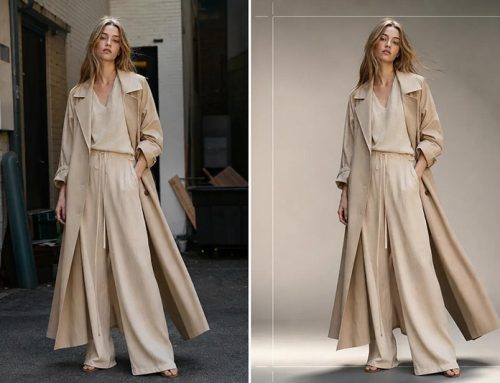
A product photographed in a studio may be placed into a different digital environment using AI-assisted editing.
This can be useful for lifestyle concepts, seasonal campaigns, and selected marketing materials. Shadows, perspective, and lighting should remain believable so that the product does not look artificially inserted into the scene.
Product Image Variations
AI may help create alternative compositions or campaign variations from existing assets. These can support creative testing across websites, newsletters, and social media advertising.
Before publishing, compare each variation with the original product photograph. Check colors, stitching, logos, buttons, fabric patterns, and other identifying details.
When Real Product Photography Is Still Important
If a customer is buying clothing online, the image should represent the item they will receive.
AI can introduce inaccurate seams, altered patterns, distorted accessories, or fabric textures that do not exist. These errors may mislead customers and create avoidable returns or complaints.
For that reason, consider using AI as a supporting tool rather than the sole source of truth for important product details.
For more practical guidance, explore my product photography portfolio and professional product photography services.
How Fashion Photographers Can Use AI in Their Workflow
AI is not only relevant to fashion brands. Professional photographers can also use it to support planning, editing, and visual development.
Create Moodboards and Campaign Concepts
AI-generated references can help communicate an idea to a client before the shoot. They can illustrate possible lighting, styling, locations, color palettes, and compositions.
These references should be treated as concept images, not promises that every detail can be reproduced exactly in a real shoot.
Explore Backgrounds and Set Design
AI tools can help visualize different environments around a subject. This may be useful when planning a studio production or discussing potential campaign directions with a client.
For the final image, the photographer still needs to consider perspective, light direction, shadows, and the relationship between the subject and the environment.
Speed Up Selected Editing Tasks
Depending on the software, AI-assisted tools can help with masking, object removal, background extension, retouching, and image cleanup.
The goal should be to reduce repetitive work while retaining control over the final result. Detailed retouching decisions still require a trained eye, particularly for skin, fabric, and commercial product images.
Develop Alternative Campaign Assets
Once the main images have been photographed, AI may help create additional visual variations for selected advertising or editorial applications.
A photographer can maintain the original photography as the visual foundation while using AI to explore carefully controlled adaptations.
To see how professional fashion photography supports brand identity and campaign production, visit my fashion photographer portfolio and services.
Best Practices for Realistic AI Fashion Images
AI-generated fashion images can look impressive at first glance, but realism depends on much more than a convincing face or an attractive background.
Use the following checklist when evaluating your results.
- Check garment construction. Verify seams, hems, buttons, zippers, collars, pockets, and other details.
- Inspect fabric texture. Look for unnatural folds, melted-looking patterns, inconsistent knit structures, or plastic-like materials.
- Verify colors. Compare the image with the real garment, especially when the product color influences a customer’s buying decision.
- Review anatomy and posing. Inspect hands, fingers, limbs, body proportions, and contact between the model and the garment.
- Check lighting consistency. Highlights and shadows should match across the model, clothing, and background.
- Maintain brand consistency. A collection should have a coherent visual style, rather than looking like a series of unrelated AI experiments.
- Inspect logos and patterns. AI tools may distort brand marks, text, prints, and repeating patterns.
- Review commercial permissions. Confirm the rights and usage terms for source images, model references, generated assets, and the AI tool itself.
For fashion ecommerce, accuracy should take priority over visual novelty. For a conceptual campaign, creative freedom may be more important, but the final images should still meet the brand’s quality standards.
Ethical and Legal Considerations in AI Fashion Photography
AI fashion photography also raises questions about consent, transparency, intellectual property, and the representation of real people.
If you use a real model’s photograph as a reference, make sure you have the necessary permission for the intended use. Do not assume that access to an image means you have the right to generate or publish derivative images.
Brands should also review the licensing terms of their AI tools and the rights associated with generated content. Legal requirements can differ by country, platform, and use case.
Transparency matters, too. If an AI-generated image could mislead customers about a real product, model, or campaign, the brand should consider appropriate disclosure and review applicable rules.
AI should support responsible creative production, not undermine the trust between a brand and its audience.
Will AI Replace Fashion Photographers?
AI will change parts of the fashion photography industry, but replacing the entire role of a professional photographer is a much broader question.
A fashion photographer does more than produce an attractive image. The work includes understanding a brand, interpreting a creative brief, directing models, controlling light, selecting compositions, collaborating with stylists, solving problems on set, and delivering a consistent visual story.
AI can assist with some image-making tasks, but it does not automatically provide the judgment and production expertise needed for every commercial assignment.
In December 2025, Reuters reported on Zara’s use of AI to create fashion imagery involving real-life models, illustrating how brands can integrate AI into existing production rather than treating it as a simple replacement for photography. The broader direction is toward new combinations of human creativity and AI-assisted production.
For photographers, learning to evaluate and use AI tools can become an advantage. For brands, the important question is not simply whether an image can be generated, but whether it communicates the right message and represents the product accurately.
The Future of AI Fashion Photography
AI fashion photography is likely to become an increasingly useful part of fashion marketing, ecommerce, and creative development.
Its most effective applications will depend on the task. AI may be valuable for concept development, visual experimentation, background adaptation, and selected campaign assets. Traditional photography remains important when a project requires accurate product representation, real model direction, or a distinctive photographic style.
Rather than choosing between AI and traditional photography, brands can evaluate how the two approaches complement each other.
A thoughtful workflow begins with a clear creative brief, uses the right source material, applies AI where it adds value, and includes human review before publication.
Conclusion: Combining AI with Professional Fashion Photography
AI fashion photography offers new ways to develop visual concepts, adapt images, and explore campaign ideas. However, quality depends on more than the ability to generate a convincing image.
Product accuracy, realistic fabric, consistent lighting, brand identity, and responsible image use remain essential.
For fashion brands and photographers, the strongest approach is to understand both the possibilities and the limitations of AI. Use it where it improves the workflow, and rely on professional photographic expertise when creative control, authenticity, and accurate product representation matter most.
If your brand is planning a fashion campaign, lookbook, or ecommerce production, explore my fashion photography services to see how professional photography can support your next collection.


Leave A Comment